Sunday, 29 August 2021

The history of portrait photography

 You probably know about portrait photography but do you know how and where this photography started, that is, do you know the history of portrait photography.  Let's talk about this history below.

 Portrait photography has had a long and varied history since the beginning of the photographic process at Louis Dagu in 1839.


 History of portrait photography


  The focus of this course will be on photography and self-image in photography  A picture is a self-portrait of a person taken by someone else while a self-portrait is a self-portrait.


  The invention of photography can be attributed to Louis Daguerre, who first presented the idea in 1839 at the French Academy of Sciences.


  Portrait studios began the following year  These early studios were not an immediate hit, as most of the public was unsure of the new medium.  To alleviate their fears, photographers tried to capture images of celebrities like Abraham Lincoln and Charles Dickens.  Portrait photography has become a means to get images of loved ones or celebrities without directing any artist to paint a time-consuming painting.


  Let’s now take a look at some of the reasons why images are starting to be widely used in photography.


  1. Preservation of history


  In addition to pictures of celebrities and family members, painting became a means of preserving the history of photography.  Ninety-one U.S. delegates signed the Washington D.C. Convention in 1857 to secure agreements and trade agreements.  They were photographed by Samuel Kohner and Julian Vanerson.


  The Civil War broke out in 1861, and it included some of the first scenes of the battle scenes and the soldiers.  It became popular to have pictures of loved ones so the people in front of the house could remember what their soldier Nick looked like when he was killed in battle.


  2. Recording offenders


  Portrait photography assisted Crime Branch in its investigation, especially with Alan Pinkerton's National Detective Agency.  Think of them as a pre-FBI version of the FBI  The organization began photographing criminals in 1870, making it the largest mugshot collection in the world.


  3. Protecting the dead


  In addition to commemorating life, pictures of the dead were also taken  People wanted a way to remember their loved ones before they were buried because of the high mortality rate of people, especially children, in the Victorian era due to widespread disease.  For this reason, as sick as we are now, you may have seen countless examples of post-mortem photos taken by dead relatives long ago.


 We hope you find out more about the history of portrait photography, if you have any doubts or you can contact us for more information.

Sunday, 22 August 2021

History of scientific photography

 Do you think there is a lot of demand for scientific photography today?  So I hope you know about photography.  But do you know where and how this photography started?  Or to put it bluntly, it is said to be the history of scientific photography.  Let's learn about the history of this scientific photography.

First scientific photograph


 Did you know that on January 7, 1839, Louis-Jack-Mande Daguerre, an established artist and chemist in Paris, announced to the French Academy of Sciences that he had perfected a photographic imaging technology that could be widely used and used.  |  His invention, later dubbed Dagururotype, was based on a special property of the silver iodide: when exposed to light, the molecules transform into a chemical that can turn into a charcoal shade and line when the mercury later develops.  The brighter the light, the darker the silver-mark amalgam  A sheet of metal copper plated with silver iodide, for a long time faced a road view, a picture of the road was presented as a line and shadow of various radiance on the Dagururotype plate.


  Daguer initially thought that his invention would often be suitable for personal use in travel logs, art installations and architectural records.  But it was more and more used in scientific research in the nineteenth century, due to its ability to capture natural reality in one moment and preserve it for detailed investigation.  Astronomers first accepted this theory;  The first images of the sun and solar eclipses were captured on both Dagururotypes in the 1940s.  By the end of the nineteenth century, photographic images - a new tool for transferring images from silver-plated glass plates to paper - became the main tool of the scientific trade, and photographic images became more and more popular in scientific journals.  Since then, the role of photography in science has only increased


  Why do scientists always consider photography so high?  Careful observation of evidence is at the heart of modern scientific methods;  Photography has always been valued as an objective technique of observation, free from the possibility of human error in the old-fashioned way of sketching experimental observation.  As important as it is, it can collect photographic data that cannot be identified or processed by the human eye.  Using technology that took the beam's invisible X-ray pathway, for example, in 1952, Rosalyn Franklin was able to reveal the exact structure of the DNA molecules embedded in it - which we now recognize as double helix.  At the other end of the special scale, telescopic cameras can record galaxies four billion light-years away from Earth, such as these images from NASA's Moon X-ray Observatory.  And photography can “slow down” events that are usually too early for the eye.  In 787878, for example, a revolutionary public photographer on a horse from Edward Muebridge resolved a long dispute over whether the four legs of a horse were off the ground at the same time.  In the 1950s, MIT physicist Harold Edgerton used a strobe light flash to create a striking image of an accurate bullet passing through an Apple bullet, sprinkled a drop of milk in a glass, and a hummingbird wing.


  These discoveries describe a fundamental structural framework: technological advances in optics, cameras, and light, and scientific advancement and discovery.  A recent example of this movement includes digital cameras  A computerized camera developed in the early 1st century that uses a light-sensitive electronic chip called a charge-coupled device (CCD), the electromagnetically charged (electronically charged) and the electronically charged (electronically charged) most of the time.  Did  Time Scientists quickly realized that they could capture images in very dark conditions, using CCTV cameras to record shapes and structures inside a bi-bi-tissue or under a microscope lens.


  Today, scientists and engineers continue to work together to develop more powerful scientific scientific imaging technology, such as functional magnetic resonance imaging (fMRI), which is used to track brain activity.  AFM), which uses reflective laser beams to map small, complex surfaces of the combined carbon atom in nanometers.  Science and photography stories must be involved in the 21st century.  In this spotlight, we invite you to learn about the forms of photography that contribute to the advancement of state-of-the-art scientific knowledge.


 I hope you have any doubts about the history of this scientific photography or you can also comment or contact us to find out more.

Sunday, 8 August 2021

History of aerial photography

 Almost everyone knows about aerial photography, but do you know where and how this type of photography began?  Or to put it bluntly, what is called the history of aerial photography.  What do you know about this history?  Let's learn about the history of this photography.


 The first well-known Ariel photographer was taken in 1858 by a French photographer and balloonist Gasper Felix Turnach, known as "Nadar".  In 5555, he planned to use aerial photography to make maps and surveys, but he had to experiment for 3 years before successfully producing the first aerial photography.  It is a view of the French village of Petit-Bucket, taken from a tertiary hot air balloon 80 meters above the ground.  Given the complexity of the early colloidal photographic process, this does not mean that it requires a complete darkroom in a balloon basket!  Unfortunately, the original photographer of Nadar could no longer survive, and the old Erythron photographer is still well known, a portrait of James Wallace Black of Boston from a hot-air balloon taken in 1860.  This was after the development of the dry plate process  No more equipment needed to be carried, and the first free flight balloon photo mission was carried out in 1879 by a tribunal over Paris.

 Today, maps are being made using this type of photography.  And a lot of projects and big buildings are getting help.


 We hope you find out more about the history of aerial photography, if you have any doubts or you can contact us for more information.

Sunday, 1 August 2021

History of astrophotography

 You probably know about astrophotography.  But do you know where and how this kind of photo started, or if you went directly to the history of astrophotography?

 Let's learn about the history of this photography


 Astronomical photography did not become a serious research device with the advent of dry plate photography until the late nineteenth century.  It was first used in 1876 by Sir William Hugins and his wife, Margaret Lindsay Hugins, to record the spectrum of astronomical objects.


 Do you know in what year the first images of space went into photographic negativity?  In 3939, Louis Jack Mande took the first photograph of the moon in Dagu.  It didn’t go very well  A year later, in 1840, John W. Draper captured a fine image of the moon.  The first postage stamp with black and white images of Queen Victoria was issued that year.  William Henry Harrison (Wig) defeated Martin Van Buren (Democrat).  Harrison died just 30 days after taking office, becoming Tyra's first vice president.  When John Draper took his successful photograph, it took 20 minutes to capture the moon in a Dagururotype image using a 5-inch reflected telescope.

 This is how astrophotography began, with the help of which many maps were made.  The development of this map has made today's map possible.


 We hope you have found out about the history of astrophotography, and if you have any doubts or would like to know more, you can also comment or contact us.  You can also check out previous articles to learn about Astrophotography.

Saturday, 24 July 2021

History of underwater photography

 You must be familiar with underwater photography.  If you do not know about underwater photography you can learn about this photography athttps://creativeindia1234.blogspot.com/2021/03/underwater-photography-meaning.html  But do you know where and how this photography began, or to be more direct, what is the history of underwater photography? Do you know the history of this underwater photography?  Let's learn about the history of this photography.

 Do you know  In 1856, English Underwater Thompson was credited with painting the first underwater water.


First under water photograph


 Dorset in Britain in 1856

  Thompson made a carpenter make him a streamer, a wooden box in which a 4 "x 5", wet colloidal glass plate camera could be fitted.  You will see the problem immediately  The plates are ready within an hour and it requires a darkroom tent on the shore for development.  There was a heavy shutter in the box in which Thompson attached a string to activate the shutter from a row boat.


  A friend of Thomson lined up at Wemouth Bay and then went downstairs until his tripod was securely fixed on a rock.  It was about eighteen feet below the surface  His exposition was about ten minutes long  The most interesting aspect for me about this photography is that I have no idea what I am looking at.  Hopefully, this became clearer when the painting was taken in 1856


  What you will often see listed as the world's first underwater photographer is the image of Louis Butan, a French zoologist, taken in 19393.  The camera and photographer were in the water and it was taken with a magnesium powder flask.  It is also the first published underwater photographer


 We hope you find out more about the history of underwater photography.  You can also contact us via comment to find out if there are any doubts or more

 Can do

Sunday, 18 July 2021

History of wildlife photography

 You probably know about wildlife photography, but do you know how and where this photography came from?  Did you know about the history of wildlife photography?  I'm sure this article will help you even if you don't know.

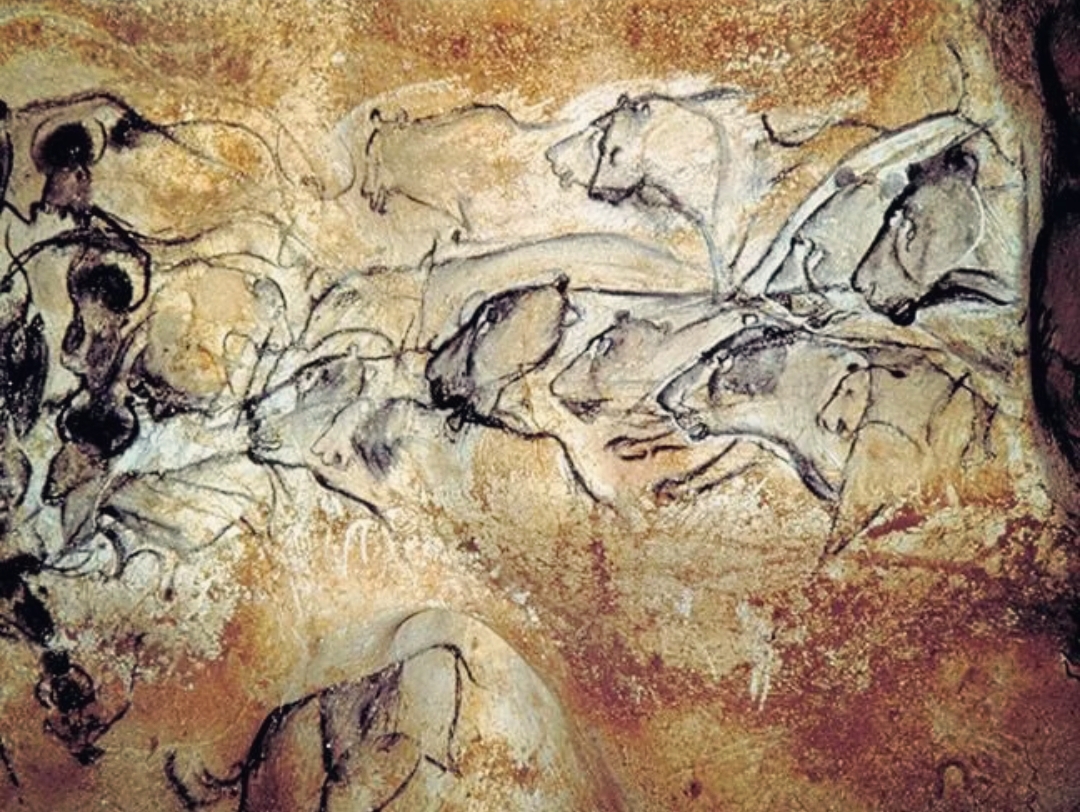
A 30,000-year-old statue of a lion in a cave in France


 Wildlife photography is a new and old art form at the same time  Photography has been around for less than 200 years, a small blip on human time.  But as long as we have artistic instincts, people are producing images of animals.  The oldest artefacts in the world are cave paintings of animals  Ancient myths and stories are full of animals and paintings depict animals throughout history.  Until the early twentieth century we had no concept of “wildlife” but we were always fascinated by wildlife.  In Western culture, wildlife was considered a part of nature rather than their different group.  But in Lewis Daguerre, who invented the first photographic method in 1 393939, he described the Daguerreotype, which helps to draw a nature.


 During the Victorian era, photography of "nature" became popular  But because the exposure time was so many minutes long, it was impossible to capture images of moving elements, so many photos were staged.  Photographing living, wild animals would be out of the question  A dead and preserved creature, however, would have completed a very beautiful creation of nature.  One of the earliest known photographs of an animal taken by John Dilwin Llevelin in 1856 is Hern standing in a pond.  Heron appears to be alive, but it was actually a preserved specimen that was posed for the image.  Of course, Levelin was unable to persuade a live hero to stand completely for 20 minutes of exposure.  Llewelyn actually tried a photo of the same nature as a staff deer a few years ago, but because it was a bad taxidermy job, the deer didn’t look natural, and the photos didn’t.  In any case, these early efforts, which we now know as wildlife photography, helped jump-start people’s interest.


 As the camera improved and the camera flash was invented, the exposure time was reduced and people were able to capture the image immediately.  Half a century after Levelin created his nature scene, photographer and early conservation advocate George Shiras took advantage of the third state of the art technology and established an early camera trap, which would create triparts by animals.  He also introduced a new way to approach wildlife so that he could photograph.  He was the first to photograph wildlife at night, and many of his photos were published in 1906, which you may have heard of: National Geographic.  Two members of the board resigned in protest, citing the fact that their magazine was a "picture book".  A few years later Shira herself became a member of the board and became famous for the National Geographic World for Photography.


 I hope you know about the history of wildlife photography.  You can contact us even if you have any questions or concerns.

Thursday, 15 July 2021

History of landscape photography

 You probably know about landscape photography.  But do you know where and how this photography started?  That is, do you know the history of landscape photography?  If you do not know the history of this photography, the following is the history of this photography.


 While understanding the history of landscape photography, it is difficult to identify the true origins of landscape photography, as the first photograph we know of was taken in the urban view by the French inventor Nicephorus Nipps in 1826 or 1827.  Then in 1835 the English scientist Henry Fox Talbot came to play with various photographic inventions.


  Landscape photography was distributing something that only painting was able to do until then - it shows reality in a two-dimensional format.


  Many landscapes were painted and painted during the Victorian era of photography, but this was in 1904 when Edward Stevens produced a photograph called Chandrama: Pond that gained some recognition in the world of landscape photography.


 The first photograph was taken extensively in 1826 by the French-born Joseph Nikefor Nipps.  It took a humble eight hours for his first exposure!


  More than a decade later, Lewis-Jack-Mande invented the Dagururotype in Dagu and only photographed a man in an accident.  The Boulevard du Temple exemplified the initial barrier of the long distance shot through the Dague on the Persian Road.


 It took ten minutes to create a single image, depicting a man’s shoes bright, and it happened to catch a man standing, with one leg standing in a chair.  The shoemaker working at the Paris' Boulevard du Temple that day had no idea he would make history.


  The technical aspects of photography have evolved and the camera has become more affordable, almost everyone can be a photographer.  It also took the form of some kind of aristocracy while decentralizing and diversifying the industry, as some artists began to distance themselves from the situation by creating their own visual movements.

  This is how landscape photography was born. I hope you know about the history of landscape photography, if you have any doubts or can contact us to know more.

History of street photography

 You've probably heard of Street photography, and some people know about photography, but do you know where and how this street photogra...